![Covenant Path logo featuring [brief visual cue—e.g., stylized mountain and light motif] representing a global Torah-based faith journey.](https://i0.wp.com/covenantpath.faith/wp-content/uploads/2025/09/cropped-covenant-path-logo.png?fit=512%2C512&ssl=1)
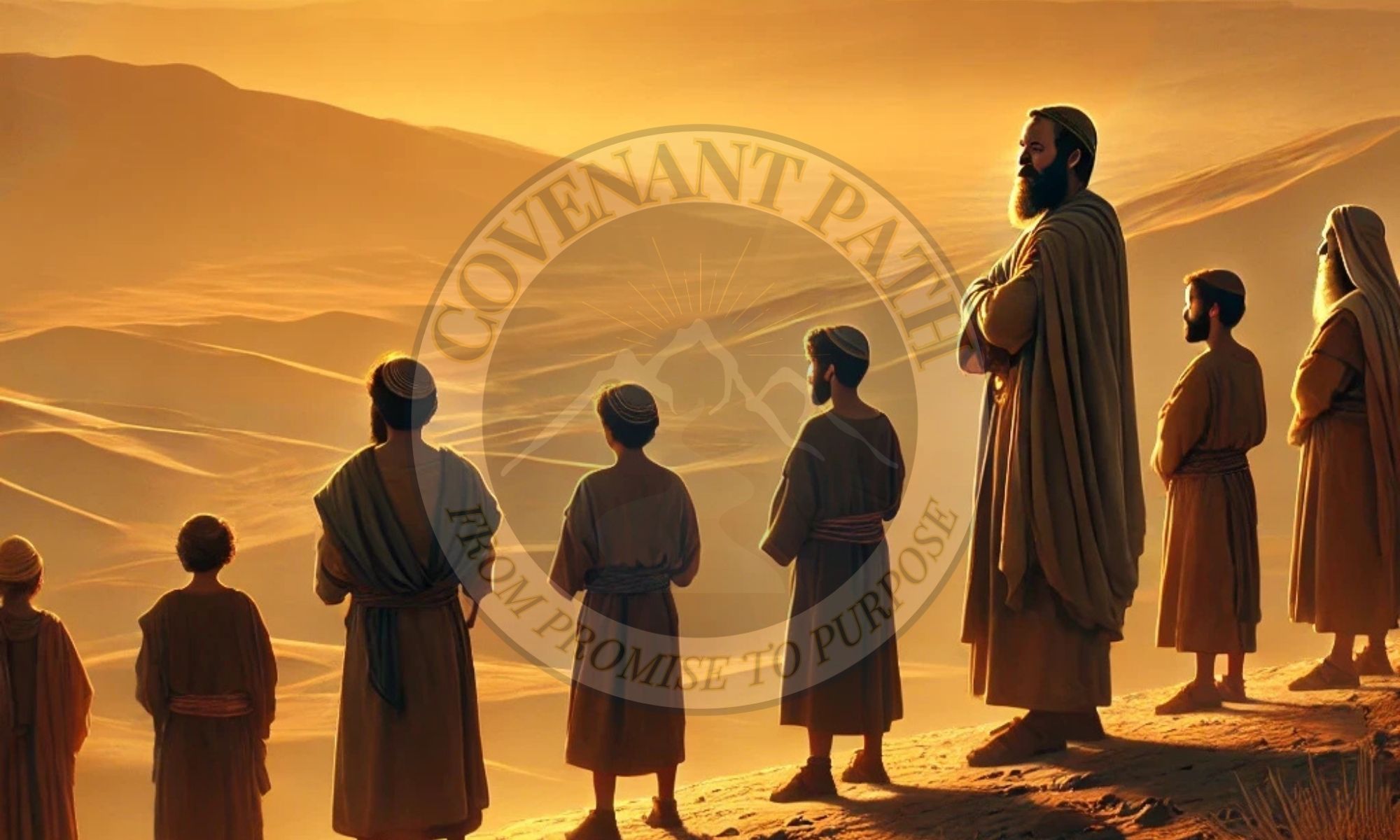
When I look at Abraham’s life, I see a truth that changes everything:
HaShem chose to send blessing through many branches, not just one. Abraham’s sons are one blessing with many paths in HaShem’s plan.
The covenant begins with a Promise, and that Promise is wide:
“You will be the father of many nations.”
— B’resheet / Genesis 17:4
This is not a metaphor. It is HaShem establishing a foundational pattern for all humanity:
One father. Many nations. Many purposes. One God.
And when I examine Abraham’s children, I see this design clearly.
Abraham’s Sons One Blessing Many Paths in HaShem’s Plan
Abraham has three major family streams:
- Ishmael — the firstborn
- Isaac — the covenant bearer
- The six sons of Keturah — the carriers of wisdom, trade, and expansion
Each of them come from Abraham’s body.
All of them are blessed.
Every one of them play a role in HaShem’s plan.
Not one is disposable.
None are “less.”
None are forgotten.
And all of them will matter again in the days of the Mashiach.
Let’s walk through each son and each stream.
Ishmael — Strength, Leadership, and Nations
Before Isaac is even conceived, HaShem blesses Ishmael:
“I have heard you. I will bless him… greatly increase him…
He will be the father of twelve princes, and I will make him a great nation.”
— Genesis 17:20
Ishmael receives:
- strength
- multiplication
- twelve princely tribes
- territorial expansion
- leadership among nations
Where Isaac receives the covenant assignment, Ishmael receives the assignment of strength and dominion.
His descendants spread across the Near East, controlling trade routes, deserts, and empires.
In HaShem’s design:
Ishmael’s line brings structure, leadership, and boundary-setting to the world.
In the final days:
Ishmael’s descendants appear again in prophecy as nations surrounding Israel — not cursed, but strong and present — fulfilling the promise HaShem made to Abraham.
Ishmael is not outside HaShem’s plan.
He is part of it.
Isaac — The Covenant Assignment
Isaac does not receive more blessing, but a different blessing:
“I will establish My covenant with him.”
— Genesis 17:19
From Isaac comes Jacob.
After Jacob come twelve tribes.
Through the tribes comes the Torah, the priesthood, the Temple service, and the written testimony of HaShem.
Isaac’s line becomes the teaching branch — the carriers of divine instruction.
Where Ishmael carries strength, Isaac carries revelation.
In HaShem’s design:
Isaac’s descendants are not “better” — they are simply tasked with keeping the covenant pattern visible to the world.
In the final days:
The prophets (Yeshayahu, Ezekiel, Hosea) describe a day when HaShem restores all twelve tribes and uses them as a “light to the nations,” blessing all of Abraham’s children, not replacing them.
The Sons of Keturah — Wisdom, Exploration, Expansion
After Sarah’s death, Abraham marries Keturah and fathers six additional sons:
- Zimran
- Jokshan
- Medan
- Midian
- Ishbak
- Shuah
Genesis 25 tells us Abraham gives them gifts and sends them eastward.
Their blessings manifest as:
- wisdom traditions
- astronomy and early sciences
- trade networks
- craftsmanship
- expansion into Asia and Africa
Keturah’s sons are not “side characters.”
They become massive civilizations and are included under Abraham’s umbrella of blessing.
In HaShem’s design:
This line brings innovation, skill, and cultural development — the texture of civilization.
In the final days:
Prophecies in Isaiah speak of Midian, Sheba, and Kedar (sons of Keturah and Ishmael) returning gifts to Jerusalem (Isa. 60:1–7).
This means HaShem still sees them as living branches in His plan.
They return — not as enemies — but as participants in HaShem’s restoration.
How All These Branches Work Together
When I look at the full picture, I see an incredible pattern:
- Isaac brings covenant and instruction.
- Ishmael brings strength and kingship.
- Keturah’s sons bring skill, expansion, and innovation.
It is the structure of a living body, not a hierarchy.
There’s no branch replaces another.
None cancels the other.
No branch is superior.
Each holds a different assignment given by HaShem Himself.
Abraham is not the father of one nation.
He is the father of many who serve one purpose:
To bless the earth (Gen 12:3).
Abraham’s Sons and the Days of Mashiach
Prophecy repeatedly shows all of Abraham’s lines present in the final days:
- Ishmael’s tribes surrounding Israel (Genesis 17:20 fulfilled again).
- Keturah’s nations returning offerings to Zion (Isaiah 60).
- Isaac’s tribes restored and reunited (Ezekiel 37:15–28).
- A final unity under HaShem’s rule (Zechariah 14:9).
The descendants of Abraham are not competing stories.
They are threads woven into one tapestry, converging toward the arrival of the Mashiach.
Each plays a role:
- Strength
- Revelation
- Skill
- Leadership
- Worship
- Restoration
Mashiach’s days include all Abrahamic lines, not just one tribe — fulfilling HaShem’s promise that Abraham would be the father of many nations working under one God.
Why This Matters for the Covenant Path
If HaShem blessed all of Abraham’s children:
- We cannot dismiss any branch.
- We cannot elevate one lineage above another.
- We cannot ignore the design HaShem built into the family from the beginning.
The covenant branch (Isaac → Jacob → twelve tribes) carries the teaching responsibility.
But the family of blessing includes every son of Abraham.
This gives us a clearer picture of the Covenant Path:
HaShem created a multi-branch family that will reunite in purpose under Him in the final days.
Each and every son is part of that return.
Every son carries part of Abraham’s inheritance.
All sons prepare the world for the restoration HaShem promised.
This is where our story begins.