![Covenant Path logo featuring [brief visual cue—e.g., stylized mountain and light motif] representing a global Torah-based faith journey.](https://i0.wp.com/covenantpath.faith/wp-content/uploads/2025/09/cropped-covenant-path-logo.png?fit=512%2C512&ssl=1)
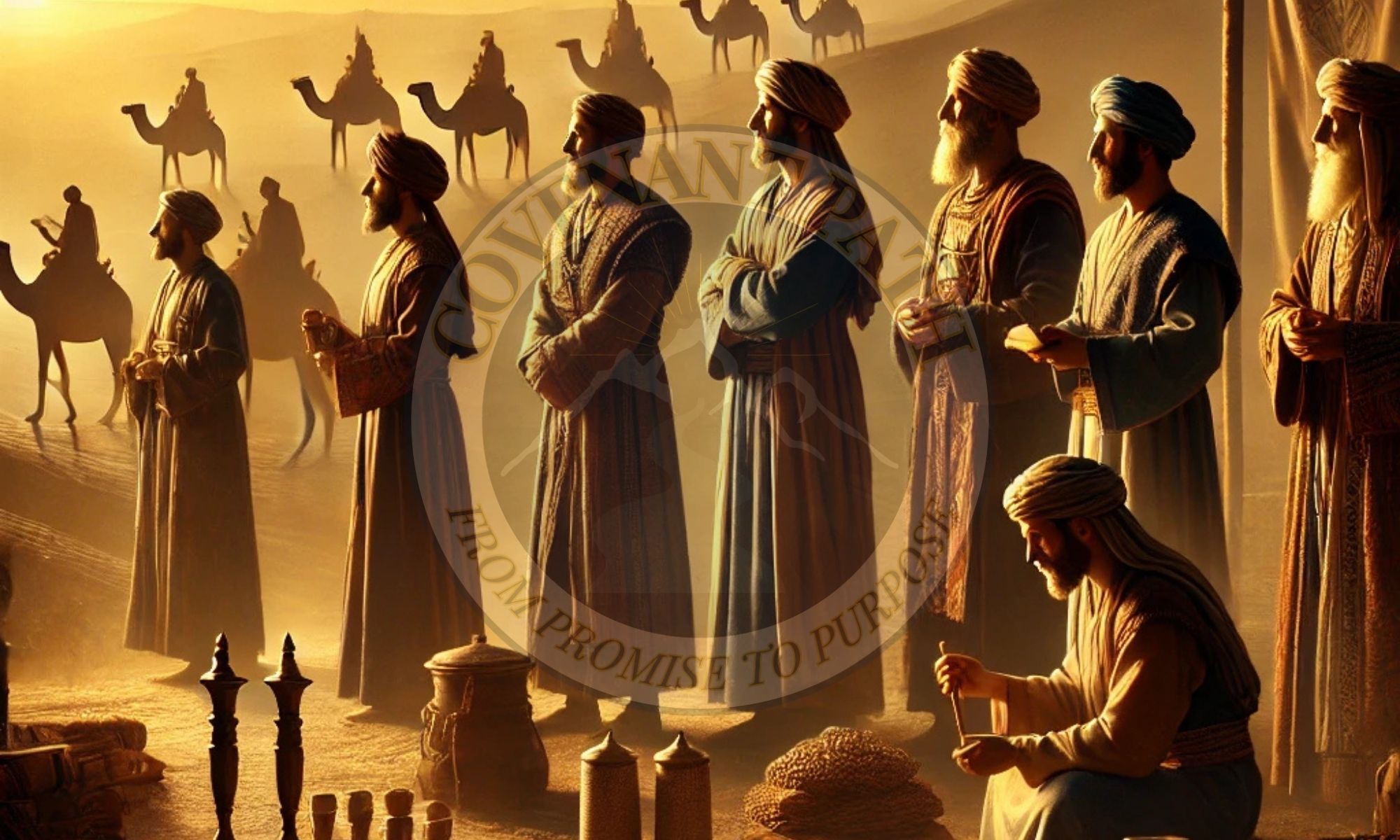
When we talk about Abraham’s family, most people think of Isaac and Ishmael.
But the Torah reveals a third major branch — the six sons Abraham fathered through Keturah after Sarah’s death. If I want to undersand the covenant i need to understand Keturah’s sons skill, trade & HaShem’s Abrahamic blessing
These sons are not side notes.
Brothers form nations.
They carry blessing.
They shape world history; and they are part of HaShem’s promise that all Abraham’s descendants would bless the earth.
To walk the Covenant Path honestly, we must understand their place.
The Sons of Keturah — Scripture Foundation
Keturah’s sons are listed in Genesis 25:1–4:
- Zimran
- Jokshan
- Medan
- Midian
- Ishbak
- Shuah
Their descendants include:
- Sheba and Dedan (Jokshan’s sons)
- Ephah, Epher, Hanoch, Abida, Eldaah (sons of Midian)
These names appear again in prophetic passages, usually connected to:
- trade
- wealth
- caravans
- incense
- gold
- camels
- international movement
These are not accidental descriptions—
they are the prophetic fingerprints of Keturah’s line.
Abraham Gave Them Gifts and Sent Them Eastward
This detail is crucial:
“Abraham gave gifts to the sons of his concubines and sent them eastward, away from Isaac.”
— Genesis 25:6
These “gifts” were not leftovers.
In ancient Near Eastern language, this likely included:
- wisdom traditions
- skills
- knowledge of farming or metalwork
- trade connections
- priestly or spiritual understanding (non-Torah, but rooted in Abrahamic ethics)
- tools, wealth, or livestock to establish new communities
They were “sent eastward” not as rejection, but as expansion.
Keturah’s sons become:
- traders
- craftsmen
- explorers
- caravan leaders
- founders of city-states
- cultural bridges between nations
They spread Abraham’s impact widely.
The Blessing of Keturah’s Line
Even though the covenant assignment went to Isaac, the blessing of Abraham goes to all his children:
“I will bless you… and all the families of the earth will be blessed through you.”
— Genesis 12:2–3
Keturah’s sons are included in this “all.”
Their blessing is expressed through:
Skill & Craftsmanship
Midian becomes known for metalwork and crafts (cf. Judges 8:24–26).
Trade & Wealth
Sheba and Dedan appear repeatedly as major trading nations.
“All from Sheba will come, bringing gold and incense.”
— Isaiah 60:6
“Dedan’s merchants traded with you.”
— Ezekiel 27:20
Their descendants shape economics, commerce, and cultural exchange.
Movement & Connection
Keturah’s descendants control key trade routes linking:
- Arabia
- Africa
- Mesopotamia
- the Levant
- the Red Sea and Gulf regions
They literally move blessing across the earth.
Keturah’s Sons in the Days of Mashiach
This part is often overlooked—but powerful.
Isaiah 60 — Nations Bring Their Gifts to Zion
This prophetic chapter describes nations coming to honor HaShem:
- Sheba brings gold and frankincense
- Midian and Ephah bring flocks and wealth
- Kedar (connected to Ishmael) brings offerings
- Nebaioth attends HaShem’s altar
Isaiah 60 is not random. It shows that the descendants of Abraham’s other branches return in the end days—not as enemies, but as participants.
Keturah’s sons bring:
- wealth
- trade goods
- craftsmanship
- animals for offerings
- resources for Temple service
This fulfills Abraham’s blessing that “all nations will be blessed through you.”
Nations From the East in Final Restoration
Prophets repeatedly mention nations from the east, the exact direction Abraham sent Keturah’s sons.
Examples:
- Isaiah 11:11 mentions regions where Keturah’s and Ishmael’s lines settled
- Isaiah 60 shows their return
- Ezekiel 38–39 describes eastern nations aligned in global events
- Zechariah 14 shows all nations ascending to worship HaShem
Keturah’s descendants are present, not erased.
Why Keturah’s Sons Matter to the Covenant Path
To understand the Covenant Path, we must see Abraham’s family as HaShem designed it:
- Isaac → Covenant & Teaching
- Ishmael → Strength & Endurance
- Keturah’s Sons → Skill, Trade, Wealth, Cultural Bridge
These branches complete each other.
Remove Isaac, the world would lack Torah.
Get rid of Ishmael, the world would lack stability and leadership.
Without Keturah’s sons, the world would lack trade, connection, craftsmanship, and cultural exchange.
The promise to Abraham is fulfilled only when all three branches do their part.
The world is blessed through all of Abraham’s children.
This is not politics.
This is Scripture.
In the Final Days — A Complete Family Returns
Prophecy shows:
- Jacob’s tribes restored (Ezekiel 37)
- Ishmael’s nations stabilized and present (Genesis 17:20)
- Keturah’s nations returning their gifts (Isaiah 60)
Together, these fulfill the destiny HaShem gave Abraham:
“I will make you the father of many nations.”
— Genesis 17:4
Abraham’s family is not divided in HaShem’s eyes. It is wide, blessed, and essential.
The restoration in the days of Mashiach requires all three branches, not only Isaac’s.
Keturah’s line is not forgotten— it helps complete the story.