
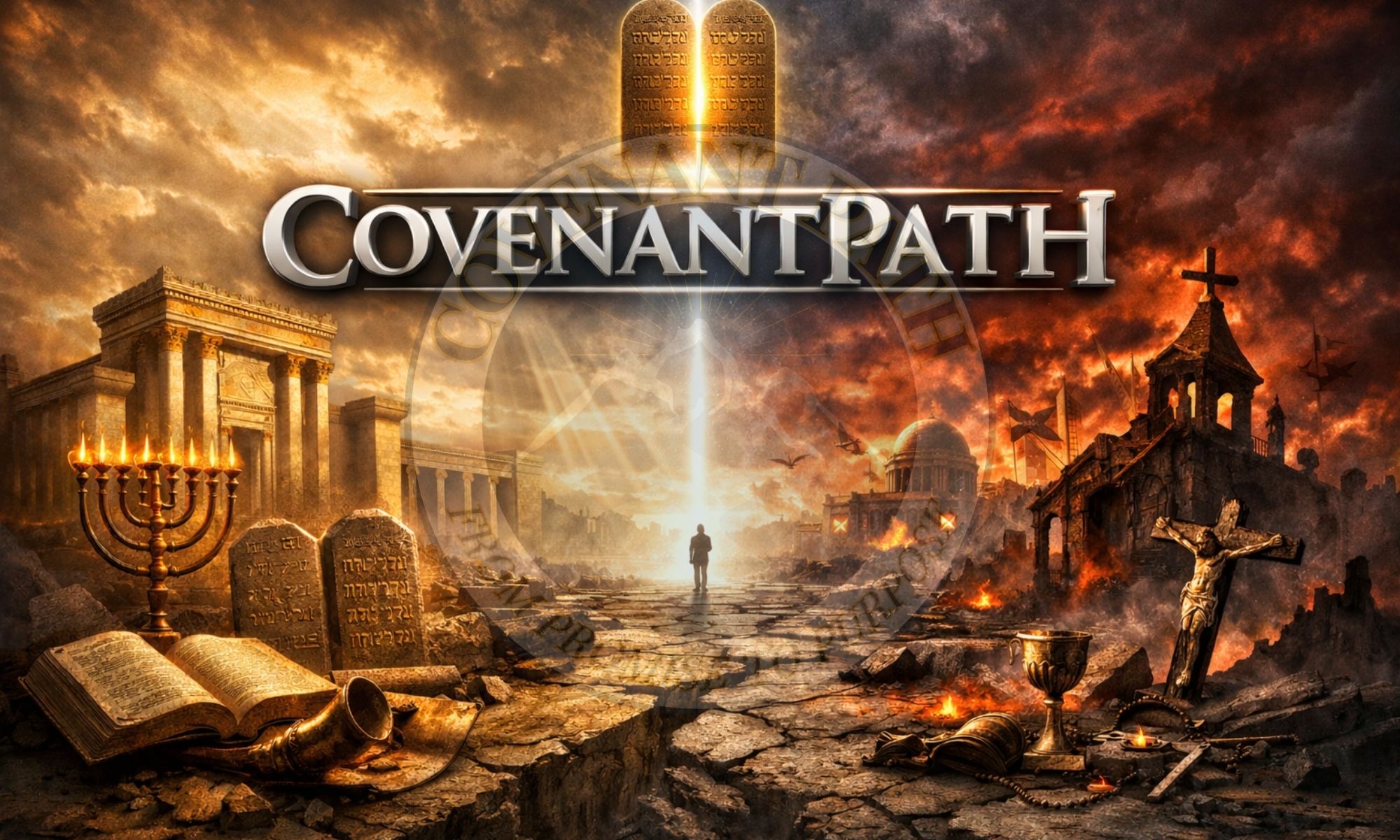
The question of Scripture vs Christianity is not emotional, cultural, or denominational—it is legal.
Scripture establishes commandments as binding, measurable, and enforceable across generations. Therefore, any system that nullifies those commandments must answer to Scripture itself, regardless of intention, sincerity, or popularity. Consequently, this examination does not ask whether Christianity feels meaningful or inspires virtue. Instead, this inquiry asks whether Christianity aligns with Scripture or violates it.
From the beginning, Scripture asserts its own permanence.
Deuteronomy forbids adding to or subtracting from the commandments under any circumstance. Accordingly, no later teacher, prophet, vision, or movement receives authority to revise what God already established. This restriction does not invite debate because Scripture does not present it as optional.

Thus, continuity—not innovation—defines legitimacy.
Importantly, Scripture anticipates deception before it occurs. Deuteronomy 13 explicitly warns that signs, wonders, and fulfilled predictions do not validate a messenger who alters commandments. In other words, sincerity does not excuse disobedience. Likewise, compassion does not override law. As a result, Scripture judges outcomes rather than motives.
Next, Scripture identifies specific commands as non-negotiable.
- The Sabbath stands as an eternal covenant sign rather than a temporary ritual.
- Idolatry remains absolutely prohibited without symbolic exception.
- Blood consumption carries an explicit and repeated ban rooted in the sanctity of life.
- Mediated worship violates divine exclusivity by redirecting allegiance away from God alone.
With those standards established, Christianity must be measured by its own public doctrine and practice. Historically, Christianity teaches that the law has been fulfilled and therefore no longer binds believers. Systematically, churches preach grace as a replacement for obedience rather than its expression. Functionally, this doctrine subtracts commandments from Scripture. Legally, Scripture classifies subtraction as falsehood without appeal.

Additionally, Christianity replaces the seventh-day Sabbath with Sunday observance.
Practically, this change asserts authority over sacred time.
Scripturally, no human institution holds jurisdiction to alter God’s appointed times.
Logically, whoever controls time claims kingship.
Therefore, this substitution represents unauthorized rule.
Furthermore, Christianity elevates a human figure to divine status through worship, prayer, and attribution of salvific power. Visibly, images and titles reinforce this elevation across denominations. Scripturally, worship of any created being constitutes idolatry regardless of theological explanation. Consistently, Scripture rejects the concept of authorized human divinity. Accordingly, Christianity violates the first commandment at a structural level.
- Moreover, Christianity institutionalizes ritualized blood symbolism through communion.
- Theologically, churches present this practice as sacred participation.
- Scripturally, the prohibition against consuming blood allows no metaphorical exemption.
- Legally, sanctifying what Scripture forbids does not transform it into obedience.
- Consequently, this ritual constitutes defilement rather than holiness.
Beyond ritual, Christianity mandates mediated access to God. Practically, believers pray through an intermediary rather than directly to God. Scripturally, God declares exclusivity without delegation. Structurally, mediation shifts dependence from obedience to relationship abstraction.
Thus, Christianity dismantles the direct covenant framework Scripture establishes.
At this point, the verdict does not rely on interpretation, tradition, or history.
Instead, Scripture itself renders judgment through its own criteria.
Christianity subtracts commandments, changes sacred time, promotes mediated worship, and sanctifies prohibited practices.
Accordingly, Scripture classifies such a system as false by definition.
Notably, this conclusion stands complete before any prophetic text is introduced.
Finally, one question remains unavoidable.
If Scripture already identifies this system as illegitimate, did any prophetic voice warn that such a deception would arise and dominate the world?
That question does not soften the verdict.
Rather, it demands the next step.
Therefore, the examination must continue.